

PC / Laptop
Latest Andru Edwards Videos
Razer’s $50 Reclusa X Mini Is the Cheapest Way Into the Keyboard Rabbit Hole

Posted by Andru Edwards Categories: PC / Laptop, Peripherals,

Fifty bucks normally buys you a gaming keyboard you put up with. Razer's Reclusa X Mini 65%, announced Tuesday, costs $49.99 and lets you pull the switches out with your fingers and drop different ones in. No soldering iron required.
Hot-swap sockets, which take most standard 3-pin and 5-pin mechanical switches, usually show up on boards costing two or three times this much. Razer put them on its cheapest mechanical keyboard and made it the first product in a new Reclusa line.
Advertisement
A 2TB SSD Now Costs $400 Because AI Data Centers Bought the Rest
Posted by Andru Edwards Categories: PC / Laptop, Storage, Artificial Intelligence,
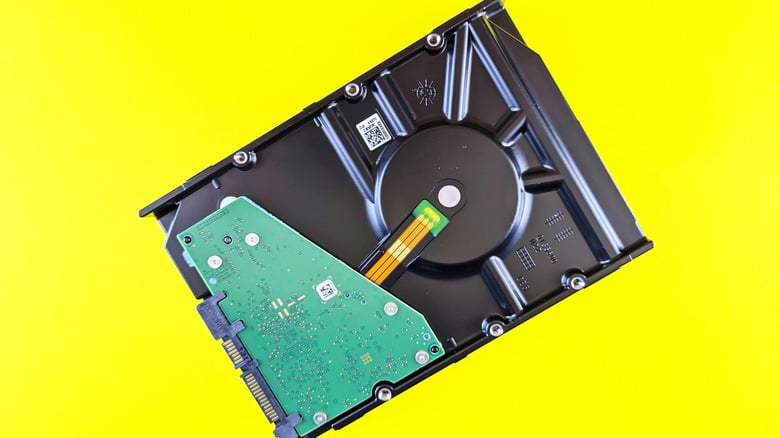
Go price a 2TB SSD right now. A drive that sat between $120 and $200 last year is knocking on $400, and plenty of listings have already walked past it. The small ones got hit too. A 256GB SSD that used to be a $25 impulse buy now runs several times that.
The usual fallback was a spinning hard drive, and those went up just as hard. A 4TB 3.5-inch SATA drive that cost about $120 a year ago is around $240 now, and 8TB went from roughly $200 to roughly $400. Engadget pulled those figures from PCPartPicker's price history.
Click to continue reading A 2TB SSD Now Costs $400 Because AI Data Centers Bought the Rest
NVIDIA Is Selling RTX 50 GPUs at MSRP at PAX West, If You Can Find the Right Guy
Posted by Andru Edwards Categories: PC / Laptop, Video Games,
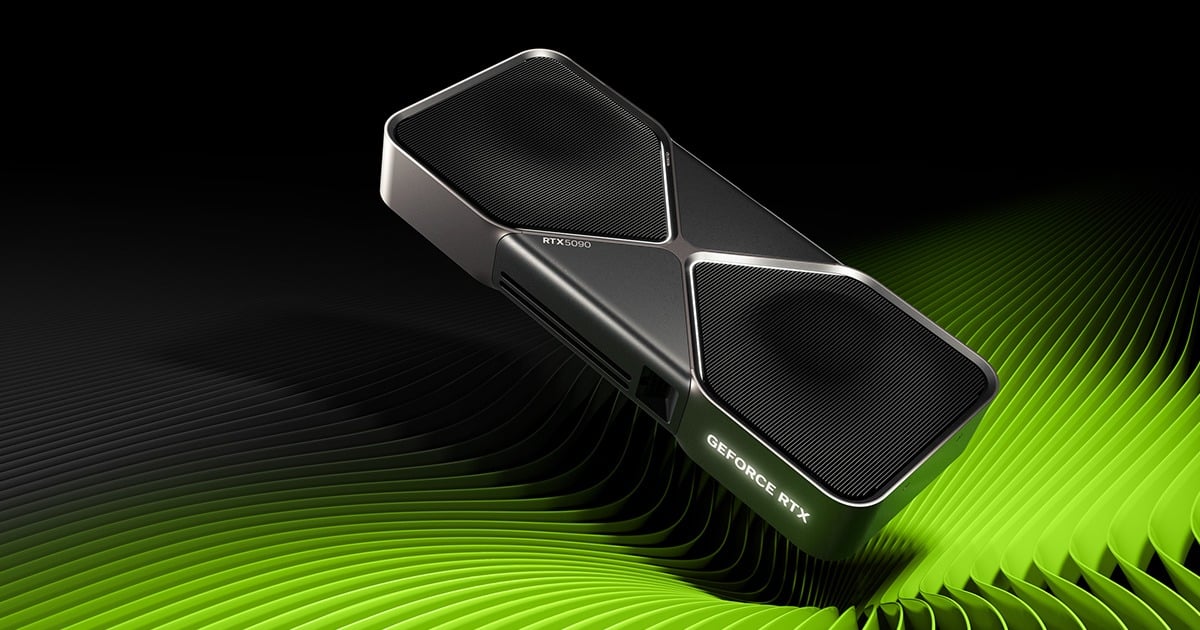
The cheapest way to buy a GeForce RTX 5090 at $1,999 this weekend involves a PAX West badge, a walk through the Seattle Convention Center, and watching one Nvidia employee's X account closely enough to know which hallway he is standing in.
Nvidia is selling RTX 50-series Founders Edition cards at list price, in person, at PAX West right now. That's the RTX 5090 at $1,999, the RTX 5080 at $999, and the RTX 5070 at $549, while supplies last. That last clause is doing a lot of work.
Nvidia’s DLSS 5 Ships September 3, and It Changes What the Artists Drew
Posted by Andru Edwards Categories: PC / Laptop, Video Games, Artificial Intelligence,

Every version of DLSS so far has been a clever way to draw the picture developers already designed. Render fewer pixels, let the AI fill in the rest, get your frame rate back. DLSS 5 is different. It reaches into the finished frame and adds detail that nobody at the studio put there.
It ships September 3 alongside NBA 2K27, it runs only on RTX 50-series cards, and Nvidia calls it 3D-guided neural rendering. The pitch is that it puts back what real-time budgets force studios to cut: light scattering under skin, light passing through hair and foliage, contact shadows, ambient occlusion. The reception so far has been rough. Early demos built on Resident Evil: Requiem and Starfield drew a pile of complaints about faces that landed square in the uncanny valley, and a leaked build that modders bolted onto older games made the criticism louder.
Click to continue reading Nvidia’s DLSS 5 Ships September 3, and It Changes What the Artists Drew
DLSS 5 Leaked Out of NBA 2K27, and Modders Already Have It Running in Control
Posted by Andru Edwards Categories: Mods / Hacks, PC / Laptop, Video Games,

A basketball game is a strange place to find Nvidia's next graphics technology, and yet here we are. NBA 2K27 went into early access this week carrying a file called nvngx_dlssnr.dll, short for DLSS Neural Rendering. Developer Renan Maniero spotted it. Within hours, modders had pulled it out and forced it into games it was never meant to touch.
DLSS 5 has not launched. Nvidia announced it in March and said it would arrive this fall, and a library buried in a basketball build is not a release. What people are running today is an unfinished piece of software that escaped early, injected into titles with no official support for it, at settings nobody outside Nvidia fully understands yet.
Chip Tariffs Could Reach Laptops and Game Consoles
Posted by Andru Edwards Categories: PC / Laptop, Rumors, Video Games,

Taxing a chip and taxing the laptop that chip lives inside are two very different policies. One duty falls on a component. The other falls on the whole machine, and the customs value of a machine is a lot bigger than the customs value of the silicon in it.
On August 27, Politico reported that the Trump administration is weighing the second version. Citing eight people familiar with the discussions, Politico said officials have been working on a round of semiconductor tariffs that would reach finished products built with chips: laptops, gaming consoles, and data center servers. CNBC and Reuters both picked the story up the same day, and Reuters noted it could not independently verify it. Nothing has been signed. No rate has been reported, and there is no effective date, because there is nothing yet to make effective.
Click to continue reading Chip Tariffs Could Reach Laptops and Game Consoles
The New Mac mini Starts at $899, and That Price Is the Real Story
Posted by Andru Edwards Categories: Apple, PC / Laptop,

The Mac mini used to be the easy recommendation. Somebody asks what desktop to buy, you say Mac mini, they say how much, you say $599. Apple dropped a new one on Tuesday with no keynote and no fanfare, and the cheapest one now costs $899.
That's a $300 jump from where the M4 model launched in October 2024, in under two years. You get the same 16GB of memory and the same 256GB of storage you got at $599. What the extra money buys is speed.
Click to continue reading The New Mac mini Starts at $899, and That Price Is the Real Story
The M5 Ultra Fuses Four Chips Into One, a First for Apple Silicon
Posted by Andru Edwards Categories: Apple, PC / Laptop,

Every Ultra chip Apple has shipped so far has been two Max chips bolted together with an interconnect called UltraFusion. The M5 Ultra is four. That's the whole story, and it's a bigger deal than the core counts make it sound.
Apple announced M5 Ultra today inside the new Mac Studio, where it scales to a 36-core CPU, an 80-core GPU, and 512GB of unified memory. Apple calls it the most powerful chip it has ever made. It's also the most structurally unusual.
Click to continue reading The M5 Ultra Fuses Four Chips Into One, a First for Apple Silicon
The New M5 Ultra Mac Studio is an AI Beast That Holds Up to 512GB of Memory
Posted by Andru Edwards Categories: Apple, PC / Laptop, Artificial Intelligence,
Apple announced the machine this morning alongside the new M6 and M5 Pro Mac mini. Pre-orders are open now, shipping starts September 22, and the 512GB configuration doesn't arrive until late October. The M5 Max model starts at $2,499.
Apple’s M6 Is Its First 2nm Chip. Here’s What That Actually Changes
Posted by Andru Edwards Categories: Apple, PC / Laptop,

Apple's new M6 chip is here, and you may be wondering what's different this time around. It's a 2 nanometer chip, but process nodes are some of the most over-hyped numbers in tech. "2 nanometer" doesn't describe the size of anything you could measure on the die. Instead, it's a label for a manufacturing generation, and it has been marketing shorthand for years. So when Apple says M6 is its first 2nm chip, the useful question is "What did Apple do with that new headroom?"
Based on what Apple published today: two more CPU cores, two more GPU cores, a second Neural Engine, and more memory bandwidth, all packed into a smaller die. M6 debuts in the new Mac mini, which starts at $899 and ships September 22.
Click to continue reading Apple’s M6 Is Its First 2nm Chip. Here’s What That Actually Changes