

Latest Andru Edwards Videos
He Worked on AGI Safety at Google DeepMind. Now He Says AI Might Kill Us All.

Posted by Andru Edwards Categories: Corporate News, Google, Artificial Intelligence,
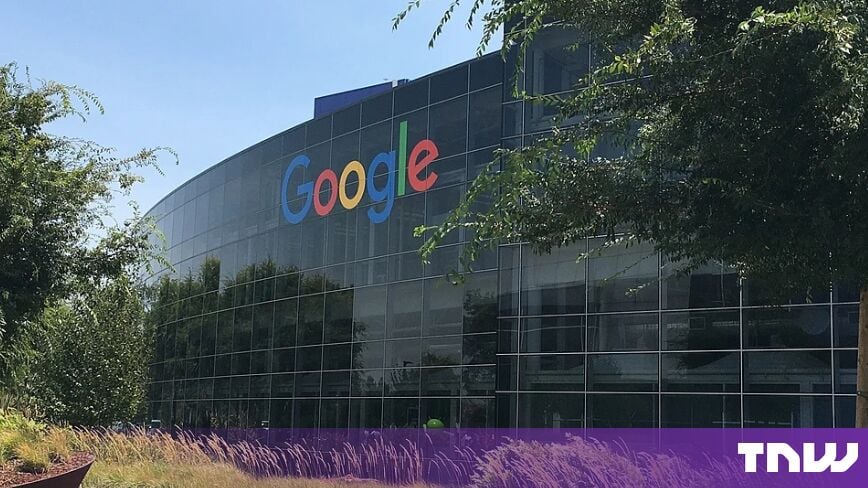
Bilal Chughtai spent about a year and a half at Google DeepMind working on AGI safety and alignment. He resigned in July. On Monday he said why, publicly, under his own name: "I earnestly believe that AI has the potential to kill us all, and that we might be running out of time to avoid this outcome."
Researchers leaving AI labs with a warning attached is not new this year. Doing it from inside Google's lab is. Chughtai appears to be the first DeepMind employee to quit and say this on the record, which is how a post from a research engineer most people had never heard of ended up in Bloomberg within a day.
Advertisement
GM Brings CarPlay Back to Its Trucks, and This Time It Shares the Screen
Posted by Andru Edwards Categories: Apple, Google, Transportation,
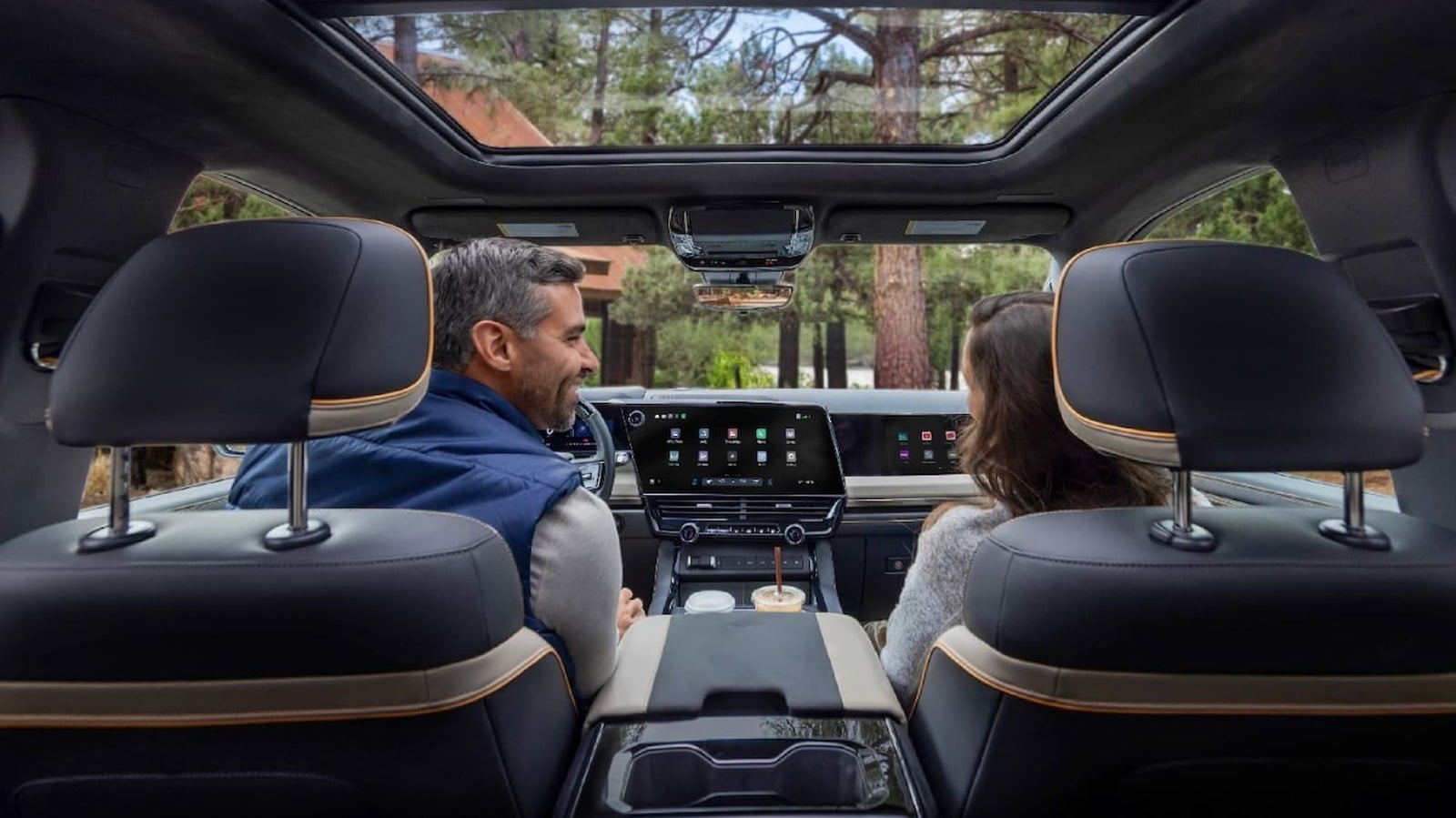
Three years ago GM decided it was done with phone projection. Today it announced the opposite. Apple CarPlay and Android Auto are coming back to its cars, though they no longer get the whole screen.
The new interface debuts on the 2027 Chevrolet Silverado 1500 and GMC Sierra 1500, with other GM models to follow. CarPlay and Android Auto now run in a window alongside GM's own software, so the map, the trailering readouts and the truck's settings stay visible while your phone's apps do their thing next to them.
Click to continue reading GM Brings CarPlay Back to Its Trucks, and This Time It Shares the Screen
Google’s WeatherNext 3 Redraws the Forecast Every Hour
Posted by Andru Edwards Categories: Google, Science, Artificial Intelligence,
The forecast you checked at breakfast was probably built from a picture of the atmosphere taken several hours before you looked at it. That lag is baked into how traditional forecasting works, and it is the thing Google DeepMind went after with WeatherNext 3, announced Thursday and already wired into Search, the Gemini app and Google Maps.
The big change is cadence. The previous version put out a new forecast every six hours. This one does it every hour, pulling in live geostationary satellite imagery as it arrives instead of waiting on the usual analysis cycle. Google calls the result "roughly five times sharper than our previous model."
Click to continue reading Google’s WeatherNext 3 Redraws the Forecast Every Hour
XREAL’s Aura Glasses Showed Up at IFA With Everything But a Price
Posted by Andru Edwards Categories: Wearables, Displays, Google,

Every couple of years somebody straps a display to your face and tells you the laptop is finished. XREAL's Aura is the 2026 version of that pitch, and it turned up at ShowStoppers during IFA in Berlin this week running Google's Android XR. It still has no price and no ship date more specific than "fall."
What happened in Berlin was a demo. XREAL announced nothing at IFA. The glasses were shown as Project Aura alongside Google at I/O back in May, then got their real name, a full spec sheet, a content lineup and a reservation page at AWE in June. Berlin was one of the first big consumer shows where a general audience could put them on, which is worth something. The news itself is three months old.
Click to continue reading XREAL’s Aura Glasses Showed Up at IFA With Everything But a Price
The Google TV Streamer Costs $150 Now, and Google Isn’t Saying Why
Posted by Andru Edwards Categories: Google, Home Entertainment,

The Google TV Streamer launched in 2024 at $100. It costs $150 on the Google Store today. Same box, same 4GB of RAM, same 32GB of storage, same remote, 50 percent more money.
Google did not announce this. No blog post, no new product page explaining a new value proposition, no statement. The number on the store listing changed, Best Buy's listing changed with it, and if you had one sitting in a cart you found out by looking.
Click to continue reading The Google TV Streamer Costs $150 Now, and Google Isn’t Saying Why
Walmart Starts Taking Apple Pay Today, After Eleven Years of Saying No
Posted by Andru Edwards Categories: Apple, Corporate News, Google,

You know the specific flavor of checkout-line dread where you reach the terminal, hover your phone over the reader out of pure habit, and nothing happens? At Walmart, that has been the default for over a decade. Today it stops being the default.
Walmart is switching on Tap to Pay at select Walmart and Sam's Club locations starting August 24, which means Apple Pay, Google Pay, Samsung Wallet, and any contactless card finally work at the biggest retailer in the country. The company says every U.S. store and club gets it by the end of 2026, with fuel stations following by mid-2027.
Click to continue reading Walmart Starts Taking Apple Pay Today, After Eleven Years of Saying No
Fitbit Data Can Finally Write to Apple Health, Twelve Years Late
Posted by Andru Edwards Categories: Apple, Wearables, Google,

If you wear a Fitbit and carry an iPhone, you've spent the last twelve years running a small, annoying errand. Your steps and sleep lived in one app. Everything else your phone tracked lived in Apple Health. Getting them into the same place meant paying for a third-party bridge and hoping it didn't break. That errand is finally over.
Google Health version 5.05 landed on iOS this week, and buried in the release notes is the thing people have been asking for since 2014: you can now share your exercise records, sleep, vitals, steps, and more from Google Health into Apple Health. It works for Fitbit trackers and the Pixel Watch, since Google Health replaced the old Fitbit app back in May.
Click to continue reading Fitbit Data Can Finally Write to Apple Health, Twelve Years Late
Samsung’s Galaxy Glasses Skip the Screen and Bet Everything on Gemini
Posted by Andru Edwards Categories: Wearables, Google, Artificial Intelligence,

The whole fantasy of smart glasses has always been the same one: a computer on your face that nobody else notices you are wearing. Samsung's new Galaxy Glasses, shown off at Unpacked, take that idea about as far as it will go. They leave out the one thing you might assume a pair of smart glasses needs, which is a screen you can see through.
Instead of putting anything in your field of view, the Galaxy Glasses lean entirely on cameras, audio, and Google's Gemini assistant. This is the first pair built on Android XR, the platform Samsung and Google have been teasing for what feels like ages, and it is aimed squarely at the Ray-Ban Meta crowd rather than anyone still waiting on Iron Man overlays. You look at something, you talk to it, and it talks back.
Click to continue reading Samsung’s Galaxy Glasses Skip the Screen and Bet Everything on Gemini
Gemini 3.6 Is Google Buying Time in the AI Race
Posted by Andru Edwards Categories: Editorial, Google, Artificial Intelligence,

Every few weeks, one of the big AI labs drops a new model and asks you to care. Google's latest ask is Gemini 3.6, and the honest pitch is sitting right there in the release: it is cheaper to run than the last one. That is it. That is the headline feature.
Which is not nothing, if you are the person paying the bill. Google calls 3.6 its workhorse model, the one meant to balance quality against cost, and it does deliver real savings there: up to 65% fewer output tokens than 3.5 Flash in some cases, and about 17% fewer overall. Tokens are how these models get billed, so fewer tokens means a smaller invoice for the companies wiring Gemini into their apps. For everyone else, it is the kind of improvement you feel in a spreadsheet, not in a conversation.
Click to continue reading Gemini 3.6 Is Google Buying Time in the AI Race
Samsung Put Google’s Research Brain on Your New Foldable. Does It Belong There?
Posted by Andru Edwards Categories: Smartphones, Google, Artificial Intelligence,

NotebookLM has quietly become the app that power users swear by, the thing you open on a laptop that already has thirty tabs fighting for space. It reads your sources, connects the dots, and answers questions about them. So here is the odd part of Samsung's latest Galaxy Unpacked pitch: that tool, now rebranded Gemini Notebook, comes preloaded on phones you fold in half.
The Galaxy Z Fold 8 Ultra, Z Fold 8, and Z Flip 8 all ship with it built in. On paper that sounds like a real upgrade over yet another chatbot shortcut. In practice, it raises a simple question worth asking before you get excited: is a deep-research desk tool something you actually want to reach for on a phone?